

 11
11
The rollout of 5G technology is drastically improving internet speeds and reducing latency. This enables seamless streaming, faster downloads, and opens new possibilities for smart cities, autonomous vehicles, and immersive virtual experiences.
The rapid expansion of 5G networks is transforming the way people, businesses, and devices connect to the digital world. With faster speeds, lower latency, and greater network capacity, fifth-generation wireless technology is creating new opportunities across communication, entertainment, healthcare, transportation, industry, and smart cities.
What Is 5G Technology?
5G is the fifth generation of mobile network technology. It was designed to provide significantly improved performance compared with previous generations of wireless networks.
Unlike earlier mobile technologies that primarily focused on faster communication between people, 5G is also designed to support billions of connected devices. Smartphones, industrial machines, vehicles, sensors, cameras, and other Internet of Things (IoT) devices can communicate through advanced wireless networks.
Faster Internet and Lower Latency
One of the most important advantages of 5G is its potential for much faster data transmission. Users can download large files, stream high-quality video, and access cloud-based applications more efficiently.
Another major improvement is lower latency. Latency refers to the time required for data to travel between a device and a network. Reduced latency can make real-time applications more responsive, which is particularly important for technologies such as remote control systems, online gaming, autonomous vehicles, and industrial automation.
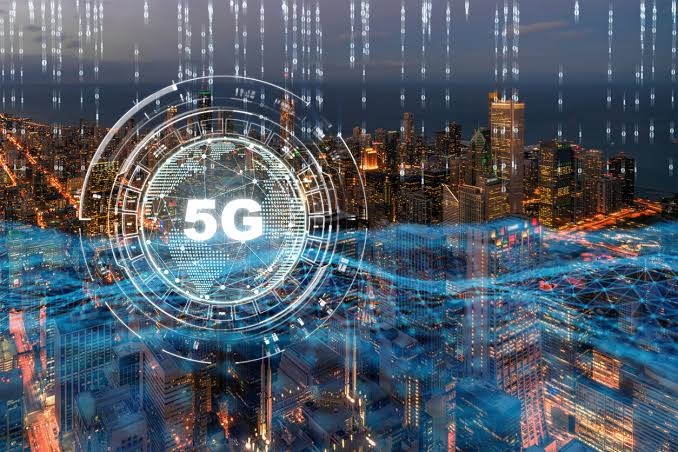
5G networks
5G and Smartphones
For everyday users, 5G can provide faster and more reliable mobile connectivity. Smartphones equipped with compatible hardware can access high-speed networks in areas where 5G services are available.
Faster connectivity can improve video streaming, cloud gaming, video calls, social media, file transfers, and other data-intensive applications.
As network coverage expands, more users are expected to experience the benefits of 5G connectivity in both urban and selected rural areas.
5G Enables the Internet of Things
The Internet of Things is one of the areas expected to benefit significantly from 5G. IoT systems connect physical objects to networks, allowing them to collect and exchange data.
With greater network capacity, 5G can support large numbers of connected sensors and devices. These systems can be used in smart buildings, agriculture, manufacturing, logistics, energy management, and environmental monitoring.
For example, connected sensors can monitor equipment performance and send information to cloud platforms for analysis. Businesses can then use this data to identify problems and improve operational efficiency.
Smart Cities and Connected Infrastructure
5G networks are also contributing to the development of smart cities. Connected infrastructure can help cities collect real-time information and improve public services.
Traffic sensors, smart parking systems, connected streetlights, surveillance systems, and environmental monitoring devices can communicate through advanced networks.
By combining 5G with artificial intelligence and data analytics, cities can potentially manage resources more efficiently and respond more quickly to changing conditions.
Transformation of Healthcare
Healthcare is another sector where advanced connectivity could have a major impact. 5G can support connected medical devices, remote monitoring systems, and high-quality video communication between patients and healthcare professionals.
In some environments, reliable low-latency connectivity can also support advanced medical technologies and remote collaboration between specialists.
The combination of 5G, cloud computing, artificial intelligence, and medical devices could create new possibilities for digital healthcare services.
5G in Manufacturing
Modern factories are becoming increasingly connected. 5G can help manufacturers connect machines, robots, sensors, and monitoring systems within industrial environments.
Factories can use real-time data to monitor production lines, identify equipment problems, and improve manufacturing processes. Wireless connectivity can also provide greater flexibility when companies need to reorganize or expand production systems.
Industrial automation powered by 5G could become an important part of the next generation of smart manufacturing.