


Artificial Intelligence (AI) is rapidly changing the nature of warfare. From autonomous drones and real-time intelligence analysis to cybersecurity and logistics, AI is becoming an essential part of modern military operations. While AI does not replace human commanders, it provides powerful tools that improve awareness, speed up decision-making, and enhance operational effectiveness.
Today, many armed forces are investing in AI technologies to strengthen national security and prepare for future challenges.
According to the U.S. Department of Defense, artificial intelligence is increasingly being integrated into military planning, autonomous systems, and decision-support capabilities. NATO is also investing in responsible AI technologies to strengthen alliance defense capabilities.
https://defense-times.com/
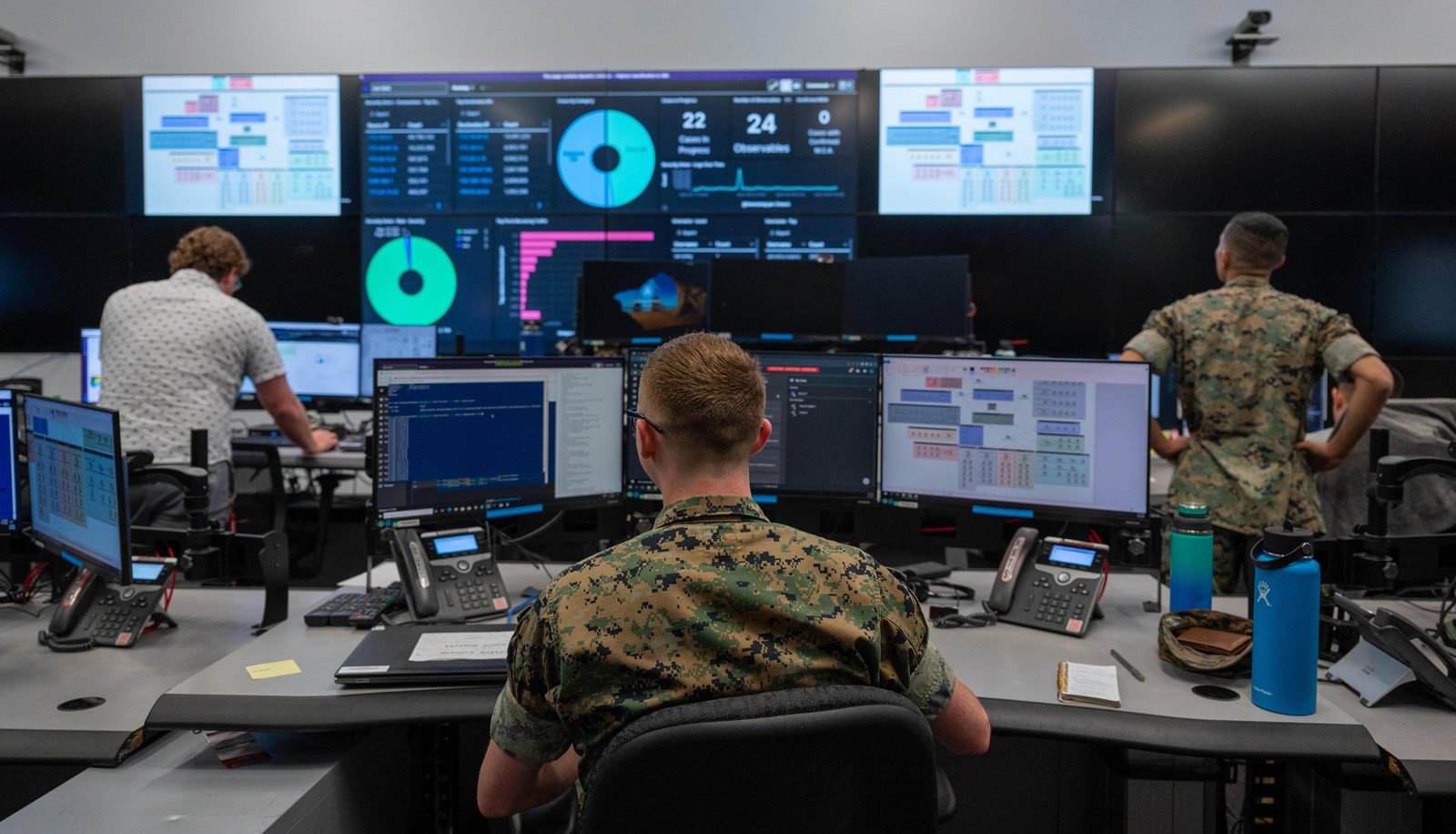
Artificial Intelligence
Why Artificial Intelligence Matters in Modern Defense
✍ Why Artificial Intelligence Matters in Modern Defense
Military organizations generate enormous amounts of data every day—from satellites, drones, radar systems, and communication networks. AI helps process this information in seconds, allowing commanders to identify threats, track movements, and make faster, more informed decisions.
✽ Key advantages include:
❃Faster intelligence analysis
❃Improved battlefield awareness
❃Enhanced cybersecurity
❃Predictive maintenance for military equipment
❃Smarter logistics and supply chain
❃Decision support for commanders
❃Reduced risk to personnel during dangerous missions
✍ AI-Powered Military Technologies
❋ Autonomous Drones
Modern drones equipped with AI can assist in surveillance, reconnaissance, mapping, and search-and-rescue operations. They can process sensor data more efficiently and support human operators during complex missions.
❋ Intelligence & Surveillance
AI analyzes satellite imagery, radar information, and video feeds to detect unusual activities and identify objects of interest more quickly than manual analysis alone.
❋ Cyber Defense
Military networks face constant cyber threats. AI-based cybersecurity systems help identify suspicious behavior, detect malware, and respond to attacks more rapidly, improving the protection of critical infrastructure.
❋ Naval Operations
AI assists naval forces with maritime surveillance, route optimization, predictive maintenance, and monitoring vast ocean areas, helping improve operational efficiency.
❋ Air Force Applications
Modern fighter aircraft increasingly use AI-assisted systems to help pilots with sensor fusion, threat detection, mission planning, and navigation while keeping the pilot in control of critical decisions.
✍ Countries Leading Military AI
Several countries are investing heavily in military AI research and development, including:
🇺🇸 United States
🇨🇳 China
🇬🇧 United Kingdom
🇮🇱 Israel
🇫🇷 France
🇵🇰 Pakistan
✍ Pakistan and Artificial Intelligence
Pakistan has shown growing interest in emerging technologies, including AI, cybersecurity, drones, and digital transformation. Universities, research institutions, and defense-related organizations are exploring AI applications that may contribute to:
✽ Border surveillance
✽ Disaster response
✽ Intelligence analysis Cybersecurity
✽ Drone operations
✽ Military communications
✽ Predictive maintenance
✽ Training and simulation
Like many countries, Pakistan’s future use of AI will depend on continued investment in research, skilled personnel, and technological development.
✍ Challenges of Military AI
Despite its benefits, AI also raises important concerns:
⚜ Ethical use of autonomous systems
⚜ Cybersecurity risks
⚜ Data privacy and protection
⚜ Reliability in complex environments
⚜ Human oversight in critical decisions
⚜ International regulations and accountability
Most experts agree that AI should support—not replace—human judgment in decisions involving the use of force.
✍ The Future of AI in Warfare
Over the next decade, AI is expected to become even more integrated into defense operations through:
✰ Autonomous reconnaissance
✰ Systems AI-assisted command centers
✰ Swarm drone coordination Predictive logistics
✰ Advanced cyber defense
✰ Space-based intelligence analysis
✰ Human-machine teaming
✰ Faster battlefield decision support
These technologies are likely to reshape military operations while increasing the importance of responsible development and international cooperation.
AI in Naval and Maritime Operations
Artificial intelligence is also reshaping naval warfare. Modern warships and submarines use AI to detect underwater threats, monitor maritime traffic, and improve navigation in challenging environments. Autonomous underwater vehicles (AUVs) can conduct surveillance, search for naval mines, and collect intelligence in areas that are dangerous for human divers. AI-powered systems also enhance maritime security by identifying suspicious vessel behavior and protecting critical shipping routes.
AI in Military Training and Simulation
Artificial intelligence has transformed how soldiers prepare for combat. AI-driven simulators create realistic training environments that replicate battlefield conditions, allowing troops to practice decision-making under pressure without real-world risks. Virtual reality and AI can adjust scenarios based on a trainee’s performance, creating personalized exercises that improve tactical skills, teamwork, and leadership. This approach reduces training costs while increasing readiness.
Border Security and Threat Detection
Many countries use AI to strengthen border security. Intelligent surveillance systems analyze data from cameras, drones, motion sensors, and radar to detect unauthorized crossings or suspicious activities. Facial recognition, object detection, and behavior analysis enable security personnel to respond quickly to potential threats. AI also reduces false alarms by distinguishing between normal activity and genuine security risks.